 ACL Injury & ACL Reconstruction Surgery in Kolkata
 Ligament Reconstruction and Return-to-Sport Care
An Anterior Cruciate Ligament (ACL) injury is a common knee injury, particularly among people involved in sports, running, fitness activities or movements that require sudden changes in direction. An ACL tear can cause pain, swelling and instability, and may make it difficult to run, jump, climb stairs or return to sports.
Dr. Tanmoy Karmakar provides evaluation and treatment for ACL injuries and other sports-related knee conditions in Kolkata, and has performed over 500 ACL reconstructions and ligament repairs. Depending on the severity of the injury, treatment may include physiotherapy and rehabilitation or arthroscopic ACL reconstruction.
What Is the ACL?
The ACL is one of the major ligaments inside the knee. It connects the femur with the tibia and helps control forward and rotational movement of the knee.
- Maintains knee stability
- Controls forward movement of the tibia
- Supports rotational stability
- Stabilizes the knee during running
- Supports jumping and landing
- Helps control sudden direction changes
Common Causes
- Sudden changes in direction
- Twisting or pivoting
- Incorrect landing after jumping
- Sudden stopping while running
- Sports involving rapid directional changes
- Direct impact to the knee
- Falls or traumatic injuries
Symptoms of an ACL Tear
- Popping sensation during injury
- Sudden knee pain
- Rapid swelling
- Difficulty walking
- Limited movement
- Knee instability
- Giving-way sensation
- Difficulty turning or pivoting
- Difficulty returning to sports
ACL Injury Grades
Grade 1 — Mild sprain: the ligament is stretched but generally retains stability.
Grade 2 — Partial tear: the ligament is partially damaged and may cause instability.
Grade 3 — Complete tear: the ligament is completely torn and significant instability may occur.
Diagnosis
- Clinical history and physical examination
- X-ray when fracture or bone injury must be excluded
- MRI when detailed assessment of the ACL, meniscus, cartilage or other ligaments is needed
Non-Surgical ACL Treatment
- Activity modification
- Pain management
- Physiotherapy
- Knee strengthening
- Quadriceps and hamstring exercises
- Balance and stability training
- Bracing where appropriate
ACL Reconstruction Surgery
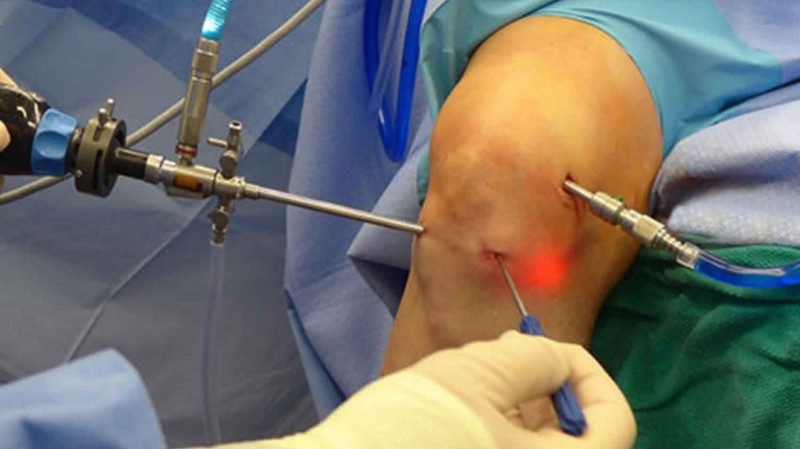
When a complete ACL tear causes significant instability, particularly in active individuals, ACL reconstruction may be recommended. The damaged ligament is generally replaced with a tendon graft, and the procedure is commonly performed using arthroscopic techniques. A meniscus tear often occurs alongside an ACL injury — see meniscus tear treatment for more detail.
ACL Rehabilitation & Return to Sports
- Control pain and swelling
- Restore knee movement
- Rebuild quadriceps and hamstring strength
- Improve balance and stability
- Progress to running, jumping and agility
- Use functional assessment before return to sport
Frequently Asked Questions
Does every ACL tear require surgery?
No. Treatment depends on knee instability, injury severity, associated damage, age, activity level and functional requirements.
Can I walk with a torn ACL?
Some patients can walk once acute pain and swelling reduce, but instability may remain during twisting or pivoting.
Can I play sports again after ACL reconstruction?
Many patients can return to sports following successful treatment and rehabilitation, but timing should depend on functional recovery rather than time alone.