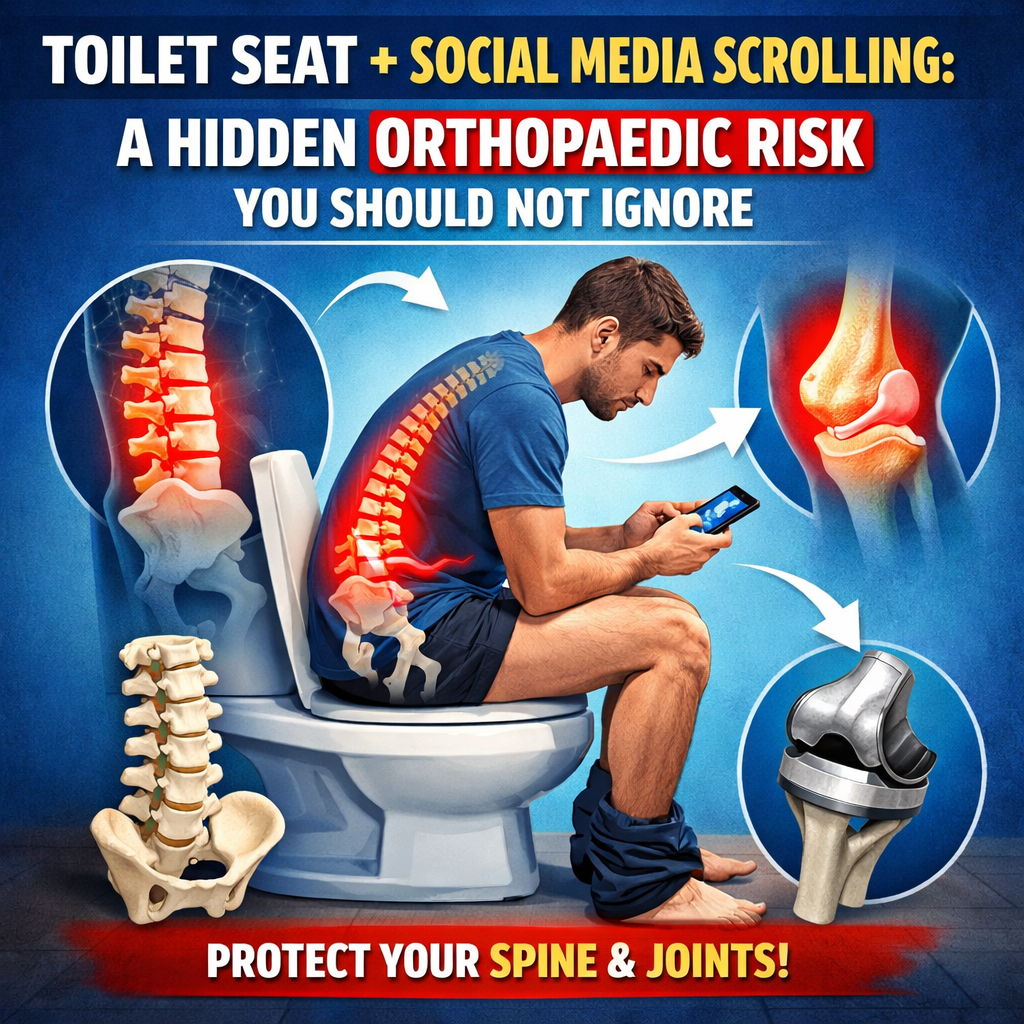
In today’s digital lifestyle, scrolling through social media has become a habit — even during bathroom breaks. Many people unknowingly spend 10–20 minutes sitting on the toilet while watching videos or checking messages. While this may seem harmless, from an orthopaedic point of view, this combination can negatively affect your spine, hips, and overall musculoskeletal health.
Why Prolonged Toilet Sitting Is a Problem
The human body is not designed to sit in one position for long periods, especially in a slightly forward-bent posture. When you sit on a toilet seat, your hip and knee angles change, and your lower back loses its natural support. Adding mobile phone use often makes posture worse, as most people lean forward or round their shoulders while looking down at the screen.
This posture increases pressure on the lumbar spine, which can gradually lead to lower back pain, stiffness, or muscle fatigue. Over time, repeated strain may contribute to chronic orthopaedic issues.
Orthopaedic Risks of Long Toilet Sitting
1. Lower Back Stress
Sitting for extended periods increases load on the lower back discs. This can aggravate existing back problems and trigger pain episodes, especially in people with sedentary lifestyles.
2. Nerve Compression and Leg Numbness
Staying in one position for too long may compress nerves around the pelvis and thighs. Many people experience temporary numbness or tingling in their legs after prolonged sitting — a warning sign that circulation and nerve flow are being affected.
3. Hip and Knee Strain
Static sitting reduces blood circulation and keeps joints in a fixed angle. This can cause stiffness in the hips and knees, particularly in older adults or those already dealing with joint pain.
4. Neck and Shoulder Problems
Phone usage encourages a forward head posture, often called “text neck.” This increases stress on neck muscles and can lead to cervical pain or upper back discomfort.
Healthy Habits to Protect Your Spine
Orthopaedic specialists recommend keeping toilet time short and purposeful. Ideally, you should not sit for more than 5–7 minutes. Avoid taking your phone into the bathroom, as it subconsciously increases the time spent sitting.
Simple changes can make a big difference:
- Keep your spine straight and avoid slouching
- Finish quickly and stand up instead of lingering
- Stretch lightly if you feel stiffness or numbness
- Maintain an active lifestyle to strengthen back and core muscles
When Should You See an Orthopaedic Doctor?
If you frequently experience back pain, leg numbness, hip discomfort, or stiffness after sitting, it may be time to consult an orthopaedic specialist. Early attention helps prevent minor issues from turning into long-term problems.